Swift Shift
PRODUCT STRATEGY
RESEARCH
Overview
Healthcare staffing agencies face 10+ hour manual processes per placement. Modern platforms like Staftr achieve 75% contractor response rates vs 3% for traditional methods, but no platform serves boutique agencies with <50 nurses which is a underserved, high-margin segment.
Through 5 informational interviews with nursing family members, I identified an opportunity to build a platform optimized for speed, economics, and compliance.
Solution
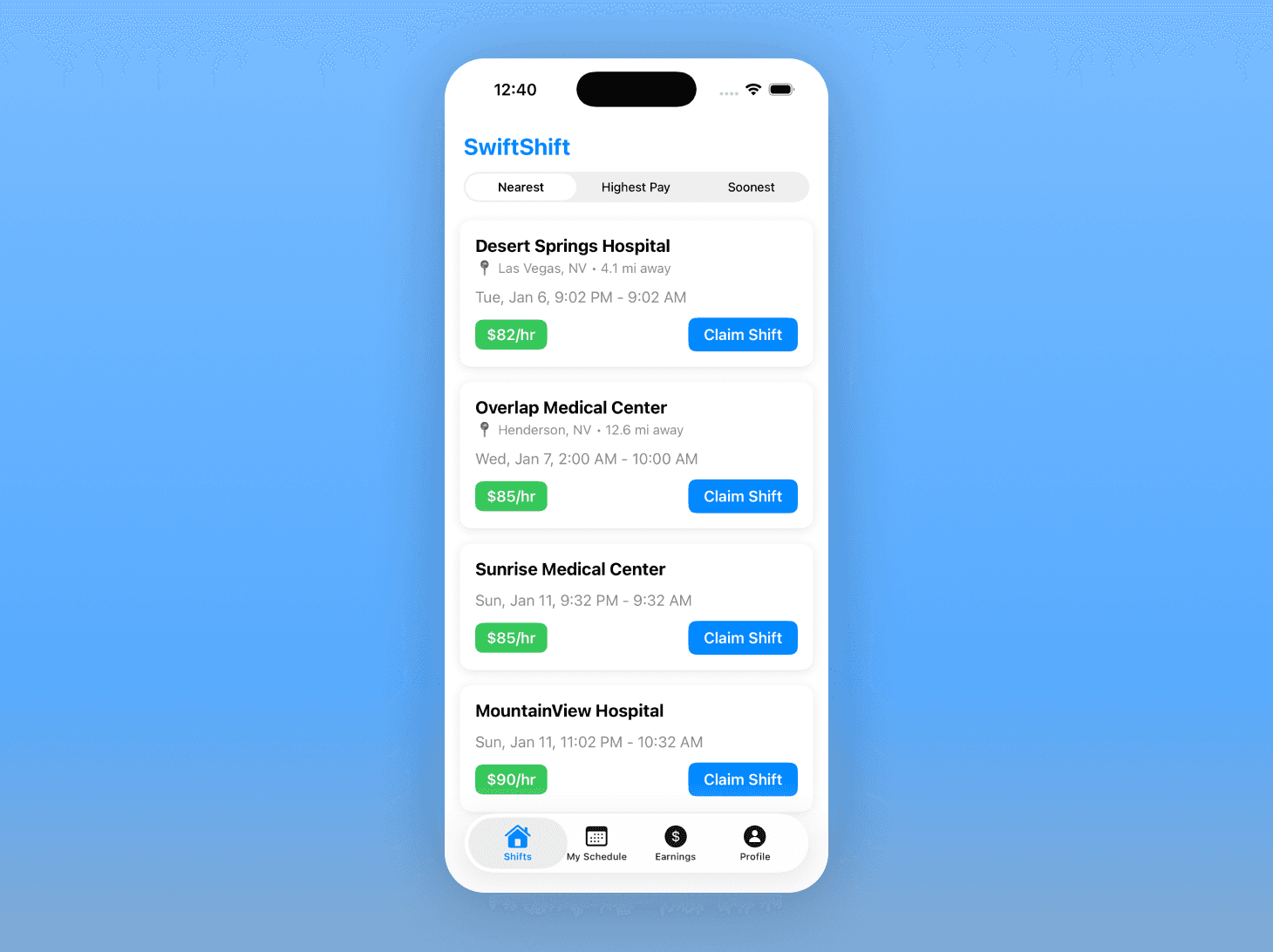
Designed SwiftShift as a hybrid iOS/Web platform that enables "3-minute shift fills" for boutique healthcare staffing agencies.
Core Product Architecture:
Web App (Agency Owners): Drag-and-drop scheduling, credentialing management, billing automation, compliance tracking
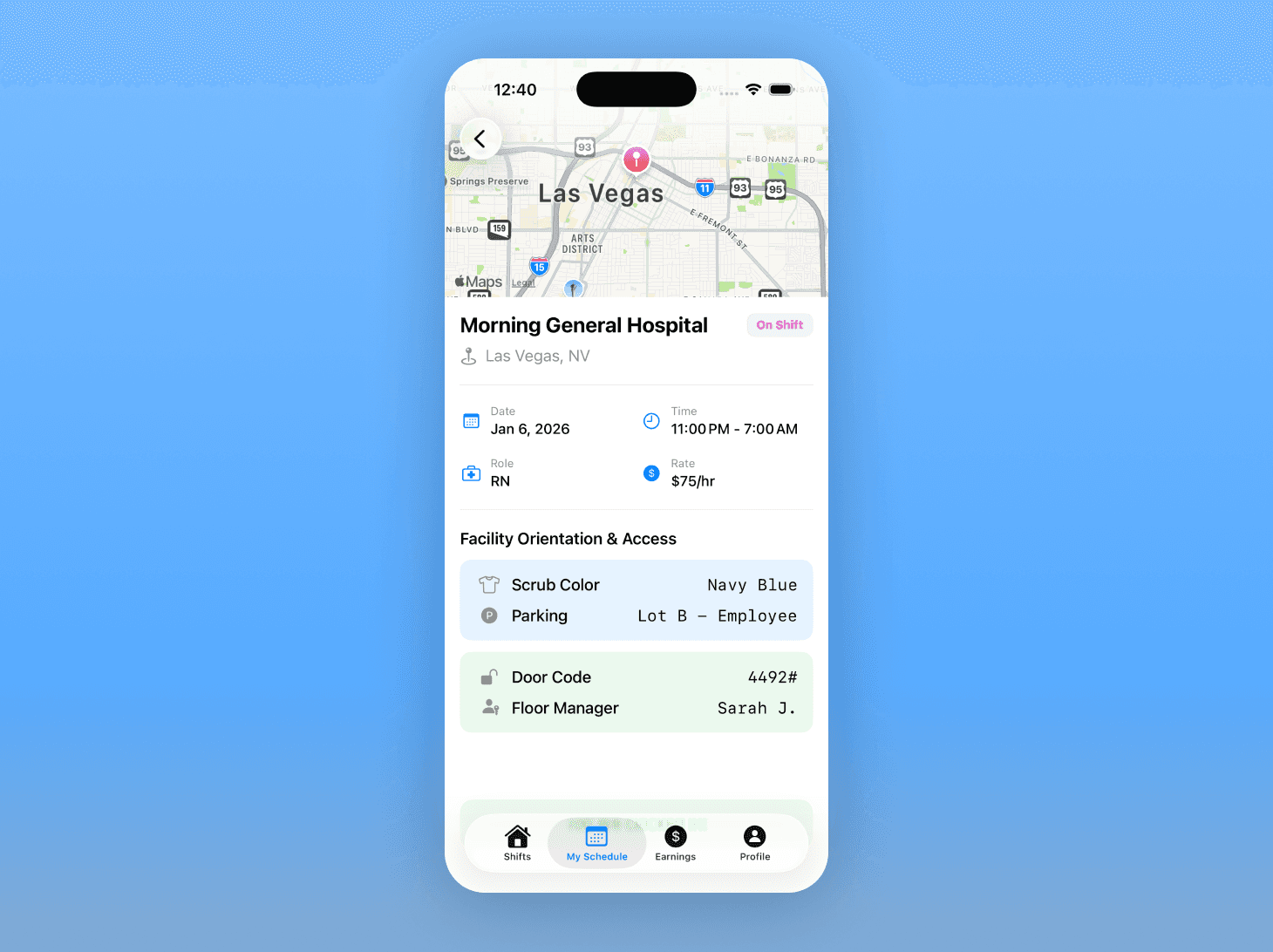
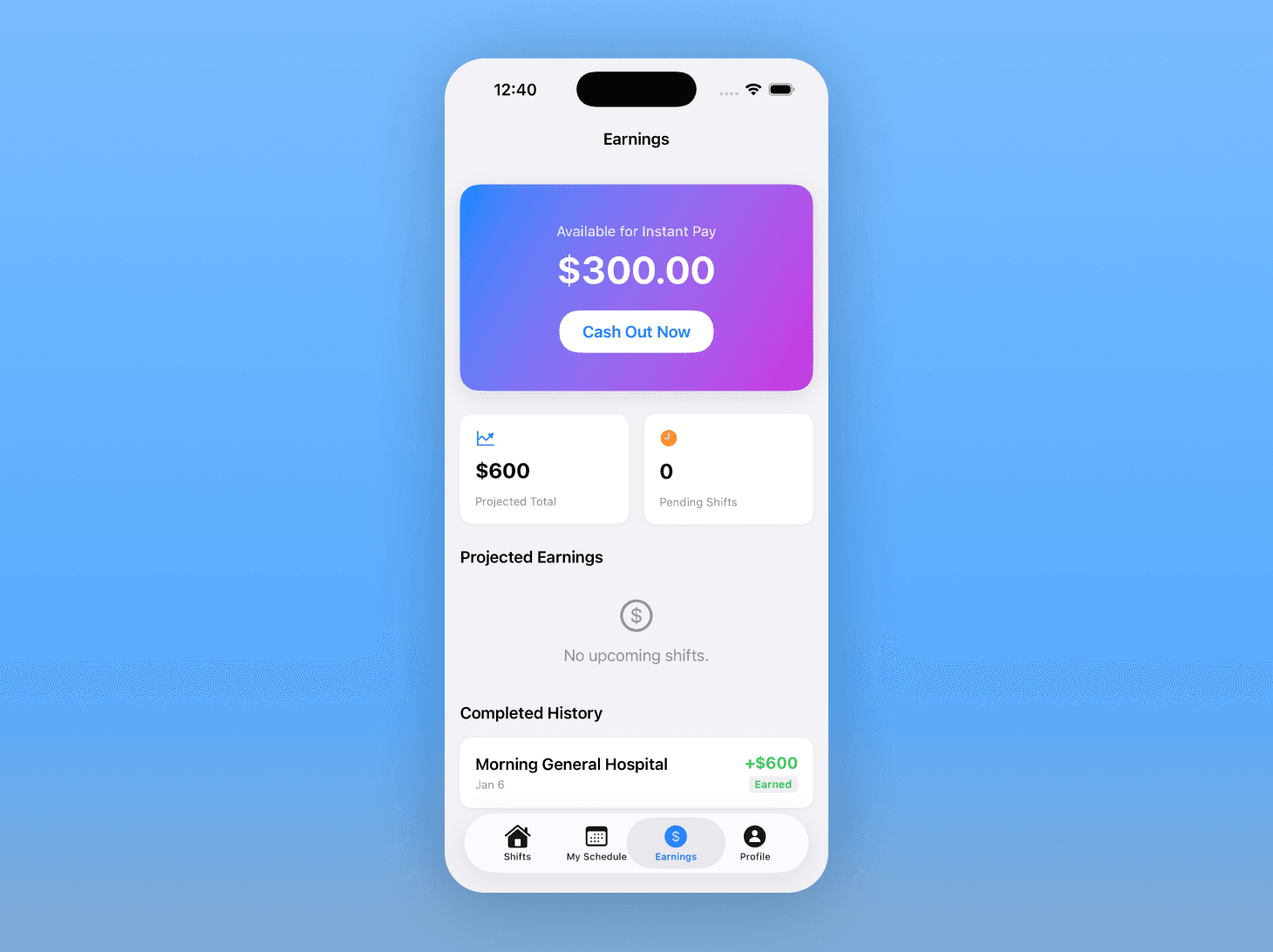
iOS App (Nurses): One-tap shift claiming, biometric clock-in/out, instant pay access, document upload via camera
Compliance Engine: HIPAA-compliant data handling, Primary Source Verification (PSV) automation, credential expiration alerts
Real-Time Matching: Geofence-based shift notifications, favorite nurse prioritization, escalation logic for unfilled shifts
Key Product Decisions
Hybrid architecture: Web for billing/admin, iOS for shift claiming
Preserves agency margins by avoiding Apple's 30% IAP fee on high-value facility contracts. Administrative billing happens via web (Stripe ~2.9%), while nurses use iOS for operational tasks.
Targeted boutique agencies first (underserved segment)
Lower customer acquisition cost than enterprise, higher willingness to pay for automation, faster decision cycles without procurement committees.
"Family testing strategy" for warm network customer acquisition
Leveraged nursing relatives for initial UI feedback and warm introductions to facility managers, turning users into product champions and B2B pipeline.
PSV automation as competitive moat
Direct API connections to state licensing boards reduce credentialing time from weeks to hours, creating defensible value vs manual competitors.
Results
Product Strategy Deliverables:
Analyzed 6 competitive platforms (Bullhorn, Staftr, ShiftMed, Nursa) identifying market positioning gap
Developed hybrid architecture strategy preserving 25-27% agency margins
Designed B2B2C go-to-market leveraging nurse network effects
Created compliance framework meeting HIPAA, PSV, and state licensing requirements
Strategic Learnings:
Learned to conduct competitive analysis and identify underserved market segments
Understood platform economics: IAP avoidance strategies, SaaS + transactional pricing
Developed framework for B2B vs B2C go-to-market strategy differences
Discovered how compliance requirements (HIPAA, PSV) become product constraints and competitive moats
Skills Demonstrated
Market research & competitive analysis
Platform strategy & business model design
Stakeholder research (nurses + agency owners)
Technical architecture decisions (cost/benefit tradeoffs)