Olaera Pets
PRODUCT STRATEGY
AI/ML
Overview
Pet owners manage critical information (health records, medications, care routines) across fragmented tools like calendars, notes apps, and vet portals. This leads to missed appointments, lost records, and no long-term visibility into a pet's health history.
Through conversations with 8 pet owners, I identified an opportunity: create a single source of truth for pet care not just another reminder app, but a long-term companion system that combines organization with intelligent assistance.
Solution
Designed Olaera Pets as a lightweight MVP focused on trust and long-term retention over feature breadth.
Core Product Architecture:
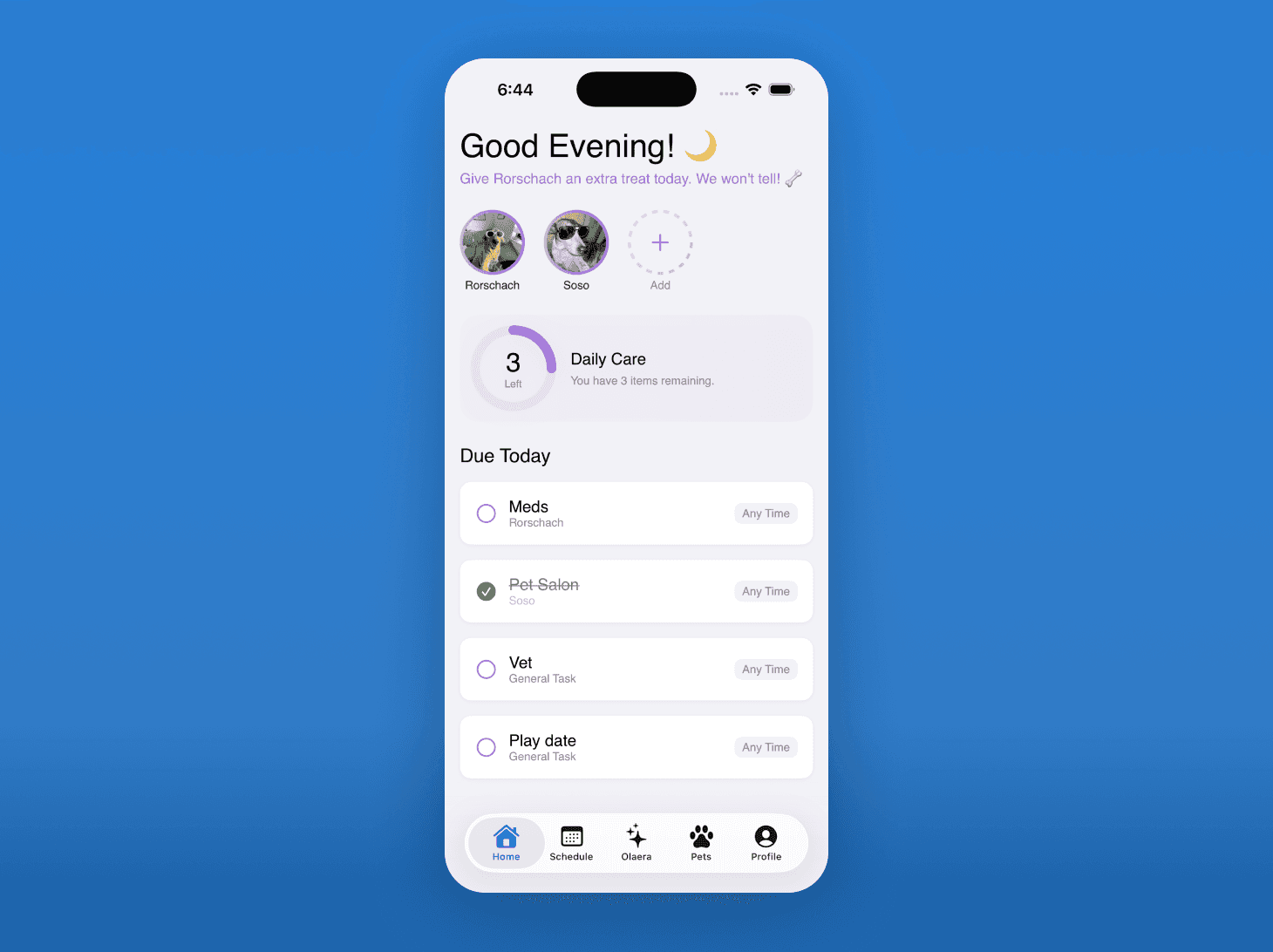
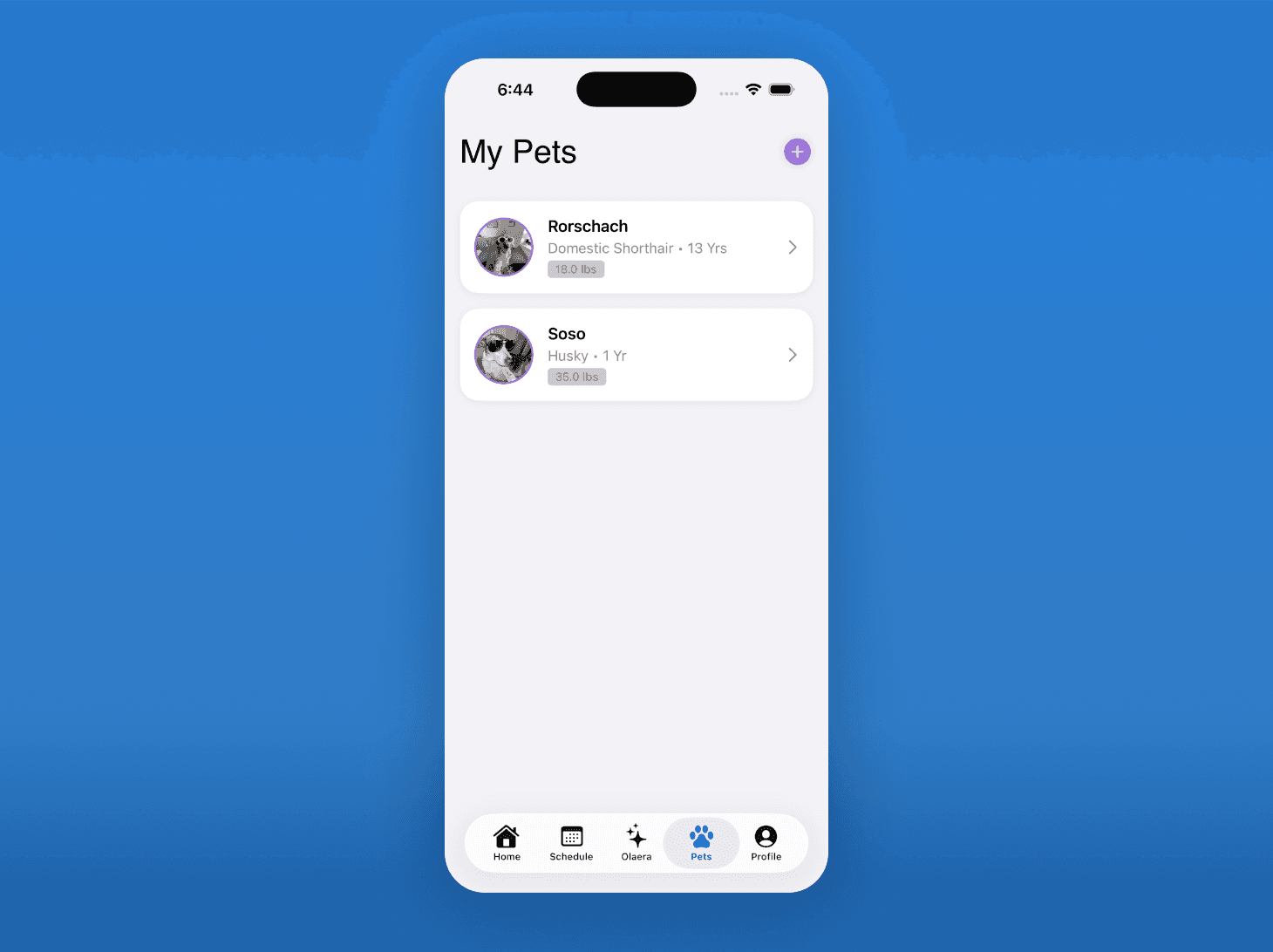
Pet Profiles: Centralized data foundation (breed, age, health history)
Care Scheduling: Calendar-based reminders for meds, grooming, vet visits
Document Storage: Upload and organize vet records tied to pet profiles
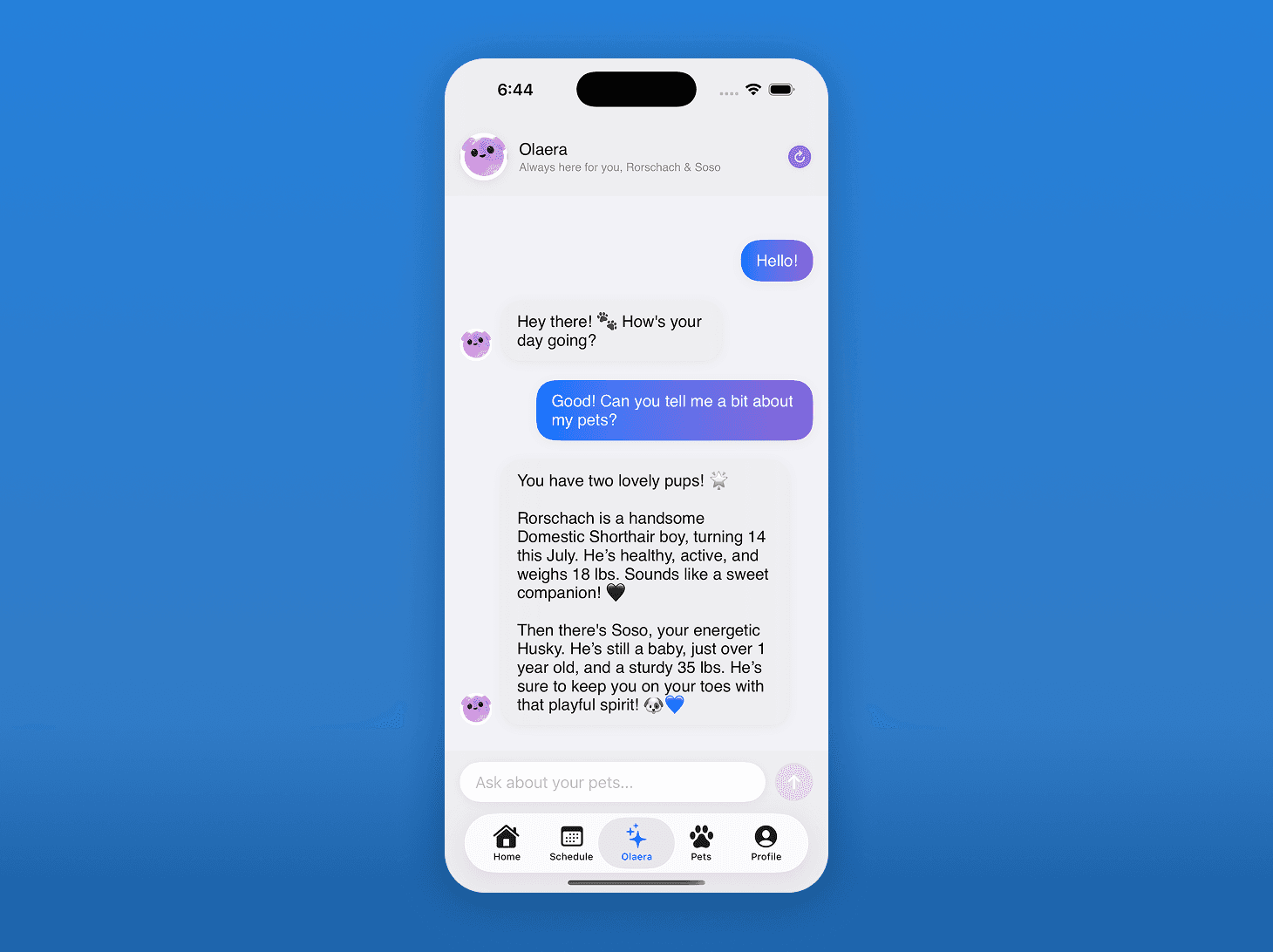
AI Assistant: Conversational interface to retrieve pet information using API-based inference
Key Product Decisions
Positioned AI as optional, not core dependency
Designed AI as assistive retrieval rather than primary interface to avoid gimmick perception and maintain trust with users who value organization first.
Deferred vet integrations and OCR to post-MVP
Validated consumer value and retention behaviors before adding B2B complexity and technical overhead (partnerships, compliance, longer sales cycles).
API-based AI over on-device models
Prioritized fast iteration and cost control over complete technical control during validation phase. Enables experimentation without infrastructure commitment.
Annual pricing as primary monetization ($25/year)
Aligned with long-term pet ownership lifecycle. Encouraged commitment through price-lock for early adopters, emphasizing lifetime value over monthly churn.
Results
Product Strategy Deliverables:
Defined MVP scope focusing on core hypothesis: do users want a durable system of record?
Developed 3-tier monetization strategy ($3/month, $25/year, lifetime)
Created risk mitigation framework addressing daily value perception and AI positioning
Established success metrics: 14-day retention, document upload rate, annual plan adoption
Strategic Learnings:
Validated market gap through competitive analysis (existing apps focus on novelty vs organization)
Learned to scope AI features conservatively to avoid over-promising
Understood importance of defining "what's NOT in MVP" for focused execution
Developed framework for balancing technical capability vs user value priority
Skills Demonstrated
Product strategy & MVP scoping
User research & competitive analysis
AI product positioning & technical architecture decisions
Monetization design & pricing strategy